Non-Medical Volunteers
Medical Mission Trips for Non-Medical Volunteers
Can I Volunteer on a Medical Mission Without Medical Experience?
Absolutely. You do not need to be a doctor, nurse, or healthcare professional to make a meaningful contribution on an international medical mission.
International Medical Relief welcomes non-medical volunteers on medical mission trips around the world. Non-medical volunteers are essential members of our teams, helping clinics operate effectively while supporting patients, healthcare providers, local partners, and the communities that welcome us.
Whether you’re a student, working professional, retiree, family member, educator, photographer, business professional, or simply someone with a desire to serve, there are meaningful ways to contribute your skills, compassion, and time on an IMR medical mission.
You don’t need medical experience to begin. We’ll help you understand your role and prepare to serve as part of the team.
Why Are Non-Medical Volunteers Important on a Medical Mission?
A medical mission takes an entire team.
While physicians, nurses, dentists, pharmacists, and other healthcare professionals provide clinical care, a successful clinic also depends on volunteers who help patients navigate the clinic, support health education, organize resources, assist the healthcare team, document our work, and help create an environment where every patient is welcomed and treated with dignity.
Non-medical volunteers help make that possible.
Think about a patient arriving at an IMR clinic for the first time. Someone welcomes them. Someone helps them understand where to go. Someone supports registration and patient flow. Someone helps organize educational materials. Someone assists the pharmacy or dental team in an appropriate support role. Someone helps families navigate from one area of the clinic to another. Someone documents information that helps the team better understand the patients and communities we serve.
Those responsibilities may not require a medical license, but they are important to both the patient experience and the operation of the clinic.
When non-medical volunteers take responsibility for essential non-clinical roles, healthcare professionals can focus more of their time and expertise on the clinical care they are trained to provide.
This is why we don’t think of our teams as simply medical volunteers and everyone else.
We are one team, bringing different training, talents, experiences, and responsibilities together with a shared purpose: to serve patients and communities well.
What Do Non-Medical Volunteers Do on a Medical Mission?
Non-medical volunteers work side by side with IMR’s medical and dental teams, local healthcare professionals, community partners, and fellow volunteers throughout the clinic experience.
Depending on the mission, your interests, your experience, and the needs of the team and community, you may assist with patient registration and intake, community health education, patient flow and escort services, pharmacy support, clinic setup and breakdown, documentation and statistics, photography and mission storytelling, or other community projects.
Every clinic is different, and flexibility is part of international medical volunteering. Your role may change from day to day as patient needs, clinic locations, team composition, and available resources change.
Some of the most valuable contributions happen when volunteers arrive prepared to learn, work as part of a team, and ask a simple question: “How can I help?”
Community Health Education: Creating Impact Beyond the Clinic
One of the most meaningful opportunities for non-medical volunteers is community health education.
Medical care can address an immediate need. Education can provide individuals and families with practical information they can continue using after the clinic is over.
Working with IMR team members, local healthcare professionals, and community partners, volunteers help share culturally appropriate health education based on the priorities and needs of the communities we serve.
Education may include topics such as clean water, handwashing and hygiene, hydration, nutrition, oral health, women’s health, children’s health, disease prevention, and other practical health and wellness information appropriate to the community and mission.
Community health education allows non-medical volunteers to contribute to something larger than a single patient encounter: helping individuals and families gain knowledge they can use in their everyday lives.
Your Skills Have a Place Here
You may be surprised by how much the skills you already use in everyday life can contribute to a medical mission.
Are you a teacher or educator? Your ability to communicate and help people understand new information may be valuable in community health education.
Are you organized and detail-oriented? You may thrive in patient registration, clinic flow, documentation, statistics, supplies, or other operational roles.
Are you a photographer, writer, videographer, or communications professional? Your skills may help responsibly document the work of the team and share the experiences and voices of the communities we serve.
Do you work in business, logistics, hospitality, customer service, technology, or project management? Organization, communication, problem-solving, teamwork, and the ability to adapt when plans change are all valuable skills in a busy clinic environment.
Are you a student considering a healthcare career? You can experience global health firsthand while learning about healthcare delivery, public health, teamwork, community health education, cultural humility, and the many professions involved in caring for patients.
Are you a parent, retiree, or family member traveling with someone in healthcare? Your life experience, patience, compassion, and willingness to contribute can be equally valuable.
Some of the most important qualities you can bring are kindness, curiosity, flexibility, reliability, compassion, respect, and a willingness to learn.
Meaningful Service Within Your Role
Being part of a medical mission does not mean performing medical procedures.
Non-medical volunteers are never expected to provide clinical care outside of their education, training, credentials, or assigned responsibilities. Patient safety and responsible service always come first.
Instead, you’ll contribute in meaningful ways that support the clinic and the people it serves while working alongside trained healthcare professionals and other members of the team.
Understanding both where you can help and where you should not is an important part of ethical medical volunteering.
You don’t need clinical credentials to be valuable. You need a willingness to learn, serve as part of a team, remain flexible, and approach every patient and community with dignity, cultural humility, and respect.
Can Students, Teens, and Families Join a Medical Mission?
Yes. IMR offers opportunities for students, teens, families, and other non-medical volunteers to serve on international medical mission teams when appropriate for the specific mission.
For students considering careers in healthcare, a medical mission can provide meaningful exposure to global health, teamwork, community health education, and healthcare delivery in different settings while maintaining clear boundaries around scope of practice.
Families Can Experience Service Together
Families can also experience service together, giving parents, children, and teens opportunities to learn about another culture, contribute as a team, and build relationships through meaningful service.
The goal is not simply to travel somewhere new. It is to arrive prepared to listen, learn, contribute appropriately, and serve responsibly.
More Than a Volunteer Experience
International service offers something different from traditional travel: the opportunity to experience another community through relationships rather than simply observation.
IMR volunteers are guests in the communities where we work, and we believe those relationships should begin with respect.
You’ll meet people whose lives and experiences may be very different from your own. You’ll also discover how much you share.
You’ll have opportunities to learn from local healthcare professionals, community leaders, patients, families, interpreters, hosts, and fellow volunteers. Service becomes an exchange of knowledge, experiences, perspectives, and humanity.
For many volunteers, some of the moments they remember most happen outside the tasks they expected to perform: a conversation with a patient, learning from a local healthcare provider, working beside a teammate, sharing a laugh despite a language difference, or discovering that meaningful service is as much about listening and learning as it is about giving.
There Is a Place for You on IMR Teams
You may arrive wondering, “What can I possibly contribute? I’m not medical.”
We hope you leave understanding that healthcare takes a team, and meaningful global health service requires many different skills.
Your contribution may look different from that of a physician, nurse, dentist, or pharmacist. It isn’t less important because it is different.
Bring your skills.
Bring your compassion.
Bring your willingness to learn.
We’ll help you find your place on the team.
Frequently Asked Questions About Non-Medical Volunteers on Medical Missions
Can I volunteer on a medical mission without medical experience?
Absolutely. You do not need a medical background to volunteer on an IMR medical mission. Non-medical volunteers are important members of our teams and contribute through community health education, patient support, clinic operations, documentation, logistics, and other meaningful roles based on the needs of each mission and team.
Can I go on a medical mission if I am not a doctor or nurse?
Yes. Medical mission teams need many different skills. IMR welcomes people from medical and non-medical backgrounds, including teachers, students, business professionals, photographers, writers, parents, retirees, and others who want to serve. You do not need to be a doctor or nurse to make a meaningful contribution.
What do non-medical volunteers do on medical mission trips?
Roles vary by mission, community, and team needs. Non-medical volunteers may help with community health education, patient registration and navigation, clinic setup and organization, documentation and statistics, pharmacy or dental support in appropriate non-clinical roles, photography and storytelling, and community projects.
Do I need a medical degree to volunteer abroad?
No. A medical degree is not required for many international volunteer opportunities with IMR. Your role will be based on your education, training, experience, age when applicable, and the needs of the mission. Volunteers without medical credentials can still play an important role in supporting patients, providers, clinic operations, and community health education.
Will I provide medical care if I’m not medically trained?
Non-medical volunteers are not expected to independently provide medical care outside of their education, training, credentials, or assigned responsibilities. Patient safety and responsible service always come first. There are many meaningful ways to contribute to a medical mission without practicing medicine.
Can college students join a medical mission?
Yes. College and undergraduate students can participate in appropriate IMR medical missions. Students interested in medicine, nursing, dentistry, public health, and other healthcare careers can gain exposure to global health, community health education, teamwork, and healthcare delivery while serving within appropriate roles. Students from non-medical fields are also welcome and bring valuable skills to the team.
Can high school students and teens volunteer on medical mission trips?
Yes. High school students and teens may participate in appropriate IMR medical missions. Their responsibilities are based on their age, education, experience, the specific mission, and team needs. Young volunteers can contribute to meaningful service while learning about global health, teamwork, cultural humility, community health, and responsible international volunteering.
Can families volunteer on medical mission trips together?
Yes. Families can serve together on appropriate IMR medical missions. Parents, children, and teens may have different responsibilities based on their ages, skills, and experience, but each family member can contribute in meaningful and appropriate ways. Serving together can be a powerful opportunity for families to learn, build relationships, experience another culture, and share a common purpose.
What skills are useful for a non-medical volunteer?
You may already have more useful skills than you realize. Communication, organization, teaching, problem-solving, teamwork, patience, flexibility, compassion, cultural humility, and a willingness to learn are all valuable. Professional experience in education, business, logistics, hospitality, photography, writing, technology, project management, or other fields can also strengthen a medical mission team.
Do I need special training before joining a medical mission?
You do not need medical training to participate as a non-medical volunteer. IMR provides preparation resources and mission-specific information before departure to help volunteers understand their roles and what to expect. Volunteers should carefully review their mission materials, participate in scheduled team calls, and arrive prepared to learn and work within their assigned responsibilities.
How do I prepare for my first medical mission trip?
Preparation begins well before departure. Learn about your destination, review your IMR Team Guide and mission preparation resources, understand your role, and stay current with mission-specific communications. You’ll also need to prepare for international travel, required documents, packing, health and safety considerations, cultural differences, clinic expectations, and responsible service.
What should I expect on my first medical mission?
Expect to be part of a team. Clinic locations, patient needs, available resources, and your responsibilities may vary throughout the mission, so flexibility is important. You’ll work alongside people from different professional and cultural backgrounds, learn from local partners and communities, and contribute where your skills and assigned role are most useful.
Where can non-medical volunteers serve with IMR?
Non-medical volunteers serve alongside IMR teams in communities around the world. Available opportunities vary by destination, mission dates, community needs, and team composition. Explore IMR’s upcoming medical missions to find destinations and dates that fit your interests, availability, and goals.
Why are non-medical volunteers important to IMR medical missions?
Healthcare takes a team. While licensed healthcare professionals focus on clinical care, non-medical volunteers help support many of the activities that allow a clinic to function effectively. They can help patients navigate the clinic, support community health education, organize resources, assist team operations, document the mission, and contribute to a welcoming and respectful patient experience.
Different roles require different skills, but they share the same purpose: serving patients and communities well.
Roles for Non-Medical Volunteers in Clinic
Community Health Education
Blogger & Mission Historian
Do you love to write? Do you want to be in the know? Send out the daily blog of important clinic events to the team’s family and friends. Speak with a team member in each department at the end of the day to capture their special story and write a short blog that helps family and friends at home (and on the IMR Facebook page, tweets, hashtags and Instagram!) to be part of the action!
Well Care Pharmacy Team
Be part of a nightly team that pre-packs over-the-counter medications for use the next day! Work with a group of your team members to prepare medications in advance that are commonly used. This is a great way to get to know your fellow team members! Pre-packing commonly used medications significantly cuts down the wait times in pharmacy and helps us see more patients. You will learn about the uses and common doses of a wide range of medications used in clinic.
Patient Registration and Intake
Patient Escort Services
Photo Documentarian
Statistics Team
Community Projects
Clinic Setup and Breakdown
Testimonials
Our leader, Karla, wow…she is a literal angel on earth. She goes above and beyond to help the people we are serving and above and beyond to help her team. If something was wrong, Karla was on it. Needed something, Karla was on it. She made my first time out of the US easy. She loves so quickly and is always available.
I served with an incredible team. So easy to get along with and all there with the same goal, to help. I loved them and I loved the people of Honduras. I can’t wait to go again. Wish I could go on every trip! Thank you IMR for the difference you are making in the world, I’m grateful to be apart of it! See you soon.
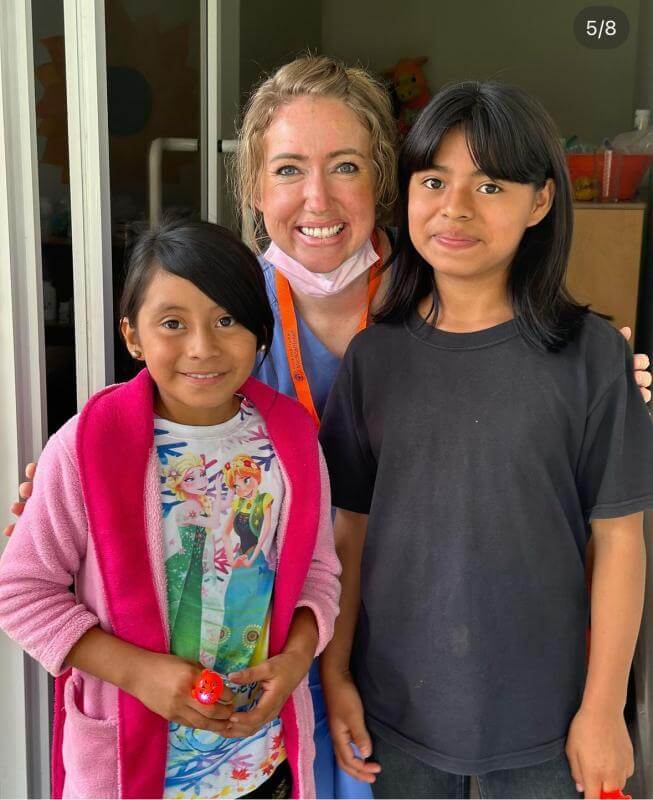
As a non-medical volunteer, there was definitely a place for me. I got to help in multiple areas, in closing with the dentists. Getting to play with and talk with the people was the best part of the whole experience. Knowing Spanish was a definite bonus, but the translators working with us were incredible. I could not believe the skill and kindness of the group of interpreters (especially since a large group of them were still in high school!). They made the experience much better for those we were seeing and for our group of volunteers.
If you want to serve, and are looking for the right group, IMR should be your first and last stop. We can’t wait for our next mission next year and for many years to come!!
As a non-medical volunteer who is aspiring to become a nurse, it was amazing to see first-hand interaction between the nurses and providers.
Because it was a mini trip we had 2 clinical days and while it wasn't long, it was evident to see the impact that each and every one of us had made with the individuals.
During my 2nd day of clinical, I had an interaction with a woman that I'll never forget. She told me about her life in Puerto Rico, her children, and other loved ones, but I soon realized that most of her family moved away from PR and she had spent most of her time alone.
I realized that by simply listening and engaging with her that I was able to make an impact. This trip was truly symbiotic, my perspective on life and the success, memories, joy that I had while giving that to others Is something that I will never forget. Thank you IMR and my amazing team leader for everything!
My experience has been that IMR teams bring medical expertise and supplies into places like Haiti and Tanzania and work collaboratively with local doctors, nurses, translators, and others within established sustainable long-term relationships.
Recently on the Tanzania trip, I appreciated the emphasis on COVID-19 safety protocols, bringing people through triage to see a doctor and with pharmacy staffing as well. The local team decided on where clinics were to be and when our team showed up the necessary spaces were available. The Tanzanian doctors were able to work on providing long-term care as needed. I enjoyed working in our IMR Tanzanian team.
I will continue to volunteer with IMR and am grateful to have the opportunity to serve in this collaborative and helpful environment.
I was able to shadow doctors, assist in pharmacy, accompany patients to the lab, perform eye tests to give glasses, educate them on community health, and help with triage. I was able to learn so much in such a short amount of time. It was an eye-opening experience and I met some of the most amazing people. To this day I still keep in touch with the other team members. This was the best trip I have ever experienced and I will never forget it.
I fell so in love with the trip and the mission that the following year I went on another IMR trip to Haiti with a friend I met in Africa. The work that IMR does truly changes the lives of the patients and the people that go on the trip.
Whether you are a physician, a nurse, a dentist, in the medical field, or simply just a student, IMR makes it their mission to help teach, educate, and provide sustainable care to those in need. Throughout my multiple experiences with IMR I can confidently say that the work they do is very special and impactful for all parties involved. I look forward to accompanying IMR on future trips. I cannot thank IMR enough for what they have done for me and so many others. I continue to support IMR on their mission while I am in Colorado and until I complete my medical license.
Join Us in Making a Difference.
You can join an IMR medical mission team or donate today!