India · Asia · Signature
India – Jaipur Signature
 This Medical Mission Has Been Completed
October 2, 2021 — October 9, 2021
Upcoming Missions in India
All India missions →


More Upcoming Missions in Asia
All Asia missions →


Mission Archive · October 2021
The Need
***Note: Full COVID-19 Vaccination is Required for Participation***
 India is the world’s second most populous country and in spite of a well trained and functional health care system, India still faces significant public health issues. Sanitation, overcrowding, and poverty all contribute to illness, especially among the poor. In 2018, India reported about a 29.9 infant mortality rate. India also still faces several gender health disparities, where women are more vulnerable to different health risks.
Join International Medical Relief (IMR) in providing quality medical care for the communities surrounding Jaipur. The team will care for those with the greatest need for medical attention. Our clinics are nestled among the throwback of centuries old traditions in southern India. Engage with this culture first hand as you provide greatly needed medical care to the densely inhabited communities. Those left out of the medical system will not only get medical attention, but will also be given needed education to help them survive in places where healthcare is difficult to access.
Our Work
 International Medical Relief started relief efforts in 2011. IMR has continued to travel to India and since 2020, IMR has held 15 clinics that had a total number of 430 staff and volunteers, who served around 16,000 patients. IMR continues to provide sustainable health care through education initiatives towards the communities we serve. Some of the educational sessions that were provided include the following: clean water, dehydration/rehydration, malnutrition, family planning, oral health, respiratory diseases, malaria prevention and hygiene/ hand washing. IMR continues to collaborate with local health officials and grow our relationships with India.
With diligent planning and preparation, IMR is dedicated to ensuring that specific goals are met on our missions, each in correlation to the United Nations Sustainable Development Goals 3 and 17.
IMR works to elevate vulnerable populations through shoulder-to-shoulder care with our local partners, creating workforce density, and a cadre of future healthcare and public health leaders in association to UNSDG 3: Good Health & Wellbeing.
In correlation with UNSDG 17: Partnerships for the Goals, our organization works in collaboration and at the request of local hosts where we are under their direct influence and affluence. IMR never goes into a country without a formal invitation where there is a great community need for medical or dental care, and health education.
This Mission
 Close your eyes and picture looking to your left to see towering, snow-capped mountains, and then looking to your right to see lush, green foliage. If you concentrate, can you hear the infectious Hindustani music or taste freshly caught fish? As the seventh-largest and second-most populous country in the world, it is not surprising that India offers a wide variety of sightseeing, topography, and cultural experiences. Shaped by the Himalayan Mountains, Northern Plains, the Indian Desert, Peninsular Plateau, coastal plains, and many islands, India is the land of “Unity in Diversity.” Among the people, diversity in race, religion, and language exists, but their vast differences in culture does not divide them. As you’ll see in our days of clinic, many city residents cannot afford the out-of-pocket expenses associated with subsidized healthcare. During this trip, IMR will help to bring much-needed aid and education to the people in Jaipur who have the most challenging time accessing medical treatment.
Jaipur is the capital and the largest city of the Indian state of Rajasthan. As of 2011, the city had a population of 3.1 million, making it the tenth most populous city in the country. Jaipur is known as the Pink City due to the dominant color scheme of its buildings. Located 268 km (167 miles) from the national capital of New Delhi, Jaipur was founded in 1727 by the Rajput king Sawai Jai Singh II, the ruler of Amer, after whom the city is named. It was one of the earliest architecturally planned cities of modern India. During the British Colonial period, the city served as the capital of Jaipur State. After independence in 1947, Jaipur became the capital of the newly-formed state of Rajasthan.
The pink city of Jaipur is known initially as the oldest part of the state. Constructions date back to the 14th and 15th centuries. The population here is predominantly merchants and artisans who earn their living by driving rickshaws, making clothes, jewelry, and selling their crafts. Around 70% of the population in Jaipur is Muslim, while the remainder is mainly Hindu. There are government schools as well as Muslim schools in the area, and while many young females are discouraged from attending, most of the male children are encouraged to attend classes.
As the population is rapidly increasing, the main challenge here is housing and accommodations. Many residences are converted into commercial shops or workshops, which leaves scarce space in which for the population to live.
In addition, the area is in much need of health education for females and essential health support due to a large number of patients being admitted to the government hospitals. The city is over capacity and is putting pressure on the local healthcare infrastructure to provide care for more patients than it can handle, resulting in delayed or lack of treatment for many people.
Lodging/Transportation
 IMR will arrange safe and reliable transportation to and from your clinic locations. If you join the group flight, your transportation to and from the airport will also be arranged by IMR. If you are flying independently and wish to have airport transportation arranged for you, you may purchase this service a la carte. Please inquire for more information and pricing.
The accommodations for our Signature trip are at a 4-star hotel, the Umaid Bhawan – a Heritage Styled Boutique Hotel. The hotel is one of the most well-known legacy vintage hotels today. It is located in Banipark, which is close to the city centre and one of the posh areas of Jaipur. This flagship hotel is run by the erstwhile royal family from Borunda and was established in 1993. It is from this hotel, that the Umaid chain of hotels became a well-reckoned force in the world of hospitality.
Highlights
 You will leave India feeling deeply connected to the people that you help during clinic, and this feeling will undoubtedly be the highlight of your trip. In this humbling yet rewarding service opportunity, you will work with communities who will be eager to connect with you. Your time in the slums will allow you to appreciate the local culture and will provide you with a chance to connect with the people you treat.
While the most rewarding aspect of this trip will be caring for the people of Jaipur, your team will also have the opportunity to visit some of the city’s top attractions. The trip’s highlights include exploring the City Palace, Albert Hall Museum, Wind Palace, Water Palace, Amber Fort, and Galti Ji Temple.

Extend Your Stay
Since you are already venturing across the globe, have you considered extending your stay by a few days to see India’s most intriguing destinations? Did you know IMR offers an exclusive three-day extension to its volunteers? By continuing your stay, you will give yourself an extended opportunity to explore Delhi and to go on a safari in Northern India! While there are over 103 National Parks in India, IMR will arrange for you to go on a highly rated, guided safari that will take you through a tiger reserve. The Ranthambore National Park is the most prominent in India, and is world-famous for its big cat viewing opportunities! While on the multi-day safari, you will spend time viewing these magnificent predators in their natural habitat, and lucky safari-goers will even catch glimpses of the hunting habits of the tigers.
For additional information, please contact our preferred travel agency, Worldwide Navigators. Their team of experienced agents and travelers is available via email at travel@worldwidenavigators.com.
Itinerary at a Glance
Day 1 · October 2, 2021
Arrivals & Orientation
Day 2 · October 3, 2021
Training, City Palace & Albert Hall Museum Tour
Day 3 · October 4, 2021
Clinic, Wind Palace & Market Visit
Day 4 · October 5, 2021
Clinic, Water Palace & Amber Fort
Day 5 · October 6, 2021
Clinic & Galta Ji Temple
Day 6 · October 7, 2021
Clinic & Free Evening
Day 7 · October 8, 2021
Clinic & Free Evening
Day 8 · October 9, 2021
Departures
Gallery


Your Journey


Clinic Photos


Full Itinerary
This itinerary is subject to change without notice.
Please note: Independent flight arrangements should not be made until after the group flight is booked. You will be notified about the group flight at the Early Bird deadline. If you are planning to fly independently and want to book your flight in advance, please contact Worldwide Navigators at travel@worldwidenavigators.com for the most up-to-date trip information before you book your independent flight. Thank you.
If you are not traveling on the group flight or joining an extension but wish to arrange transportation from the airport to clinic, please contact IMR at office@imrus.org.
Arrivals

After a long journey, you and the rest of your volunteer team will land at Jaipur International Airport. For those joining the group flight, together, you will take the airport shuttle to your hotel. Upon check-in, you will meet with the rest of your team for a delicious vegetarian dinner and orientation. During orientation, your team leader will assign roles for clinic, explain IMR’s clinic protocols, and discuss the communities you will be serving in India.
Please ensure your arrival to Jaipur is no later than 5pm as your participation in orientation is required.
Training, City Palace & Albert Hall Museum Tour

You and your team will provide training for local healthcare providers to continue IMR’s long-term, sustainable education efforts. Education is as important as medical and dental care for our patients. Each clinic includes basic health education according to the specialties and skills of the IMR volunteers, as well as the needs of the local people. When communities become empowered to take health and wellness issues into their own hands, they become self-sufficient. IMR provides learning opportunities for the local communities through classes and hands-on learning to sustain their well-being beyond our visit.
After training, your team will transport to the City Palace and SMS II Museum. Situated in the heart of the old city, it occupies about one-seventh of the landscape. The palace is a blend of Rajput and Mughal architecture and houses a seven-storied Chandra Mahal in the center, which affords a beautiful view of the gardens and the city. Featured in the palace and museum are Diwan-E-Am, Diwan-E-Khas, Mubarak Mahal, and Sileh Khana.
Diwan-E-Am, also referred to as the Hall of Public Audience, has intricate decorations and a collection of manuscripts. In contrast, Diwan-E-Khas, or the Hall of Private Audience, has a marble-pawed gallery. Mubarak Mahal has a rich collection of costumes and textiles, and Sileh Khana has a collection of armory and weapons.
When you return to your hotel in the evening, you can expect to attend a team debrief followed by an excellent dinner.
Meals: Breakfast, Lunch, Dinner,
Clinic, Wind Palace & Market Visit

While in Jaipur, you can expect a high volume of patients so your days will be long and hard, but also incredibly rewarding. To help ensure seamless communication with our patients, your team will have assigned translators who will communicate your directions and recommendations to your patients for you.
After a hearty, vegetarian breakfast at your accommodation, you and your team will transport to your clinic site.
In the afternoon, you will have the exciting opportunity to visit the Hawa Mahal, also known as “The Wind Palace.” The Hawa Mahal was built in 1799 by Maharaja Sawai Pratap and is the most recognizable monument in Jaipur. Featuring Rajput architecture, the five-storied, semi-octagonal monument has 152 windows with over-hanging, latticed balconies. The palace also houses a new museum that displays “Jaipur Past & Present.”
Meals: Breakfast, Lunch, Dinner,
Clinic, Water Palace & Amber Fort

After clinic, you and your team will get to enjoy a tour of Jalmahal and Amber Palace. The Jalmahal, also known as the Water Palace, is en route to Amer and is set in the middle of Man Sagar Lake. The site features a beautiful, paved causeway that leads up to the palace.
Next up is a visit to Amber Palace, the old capital of the Kachhwahas. Situated atop a range of steep hills, the grandeur of the fort is a remarkable sight with its surrounding battlements and palaces and fantastic blend of Hindu and Muslim architecture. The solemn dignity of its red sandstone and white marble pavilions, when reflected in the lake at the foothill, is a magnificent sight to behold. Raja Man Singh built the original palace with the additional extensions built by Maharaja Mirja Raja Jai Singh and Sawai Jai Singh lI, the last Maharaja of Amer, who later grew a new city called Jaipur which became the capital in 1727.
Meals: Breakfast, Lunch, Dinner,
Clinic & Galta Ji Temple

Today is your fourth day of clinic. This afternoon, your team will venture to the Galta Ji Temple, an ancient pilgrimage center in Jaipur. Set amidst low hills and packed with locals and tourists alike, the attractive spot has temples, pavilions, and holy kunds (natural springs and water tanks). Visitors to Galtaji will come across the complex Ramgopalji temple, locally called the Monkey temple (Galwar Bagh). It gets this moniker because of a large group of resident monkeys. The green landscape and chattering monkeys add to the delight of the area. On top of the hill is a small temple dedicated to the sun god, Surya Mandir. Constructed by Diwan Kriparam, this spectacular temple can be seen from anywhere in the city.
Meals: Breakfast, Lunch, Dinner,
Clinic & Free Evening

After another day of hard work in clinic, you will have the evening off to explore Jaipur on your own!
Meals: Breakfast, Lunch,
Clinic

On your final day of clinic you’ll likely reflect back on all those whose lives you touched during the week – and the lives that touched yours. You’ll enjoy a free evening for some final explorations of Jaipur.
Meals: Breakfast, Lunch, Dinner,
Departures

On your last day in India, enjoy one final breakfast with your team before beginning your departure home.
If you would like to extend your stay in India and need assistance with a flight schedule or planning an extension, please contact our partner, Worldwide Navigators, and one of the agents there will be happy to assist you.
Your Journey
Clinic Photos
Lodging Photos

Extension Photos


Extensions
Since you are already venturing across the globe, have you considered extending your stay by a few days to see India’s most intriguing destinations? Did you know IMR offers an exclusive three-day extension to its volunteers? By continuing your stay, you will give yourself an extended opportunity to explore Delhi and to go on a safari in Northern India!
While there are over 103 National Parks in India, IMR will arrange for you to go on a highly rated, guided safari that will take you through a tiger reserve. The Ranthambore National Park is the most prominent in India, and is world-famous for its big cat viewing opportunities! While on the multi-day safari, you will spend time viewing these magnificent predators in their natural habitat, and lucky safari-goers will even catch glimpses of the hunting habits of the tigers.
For additional information, please contact our preferred travel agency, Worldwide Navigators. Their team of experienced agents and travelers is available via email at travel@worldwidenavigators.com.

Flights & Prices
This mission has been completed. The details below are retained for reference; applications and early bird offers for this trip are closed.
Mission minimum donation: $4,500
For current travel arrangements and donation amounts, please view our upcoming missions.
Prepare to Go
A Walk Through Clinic
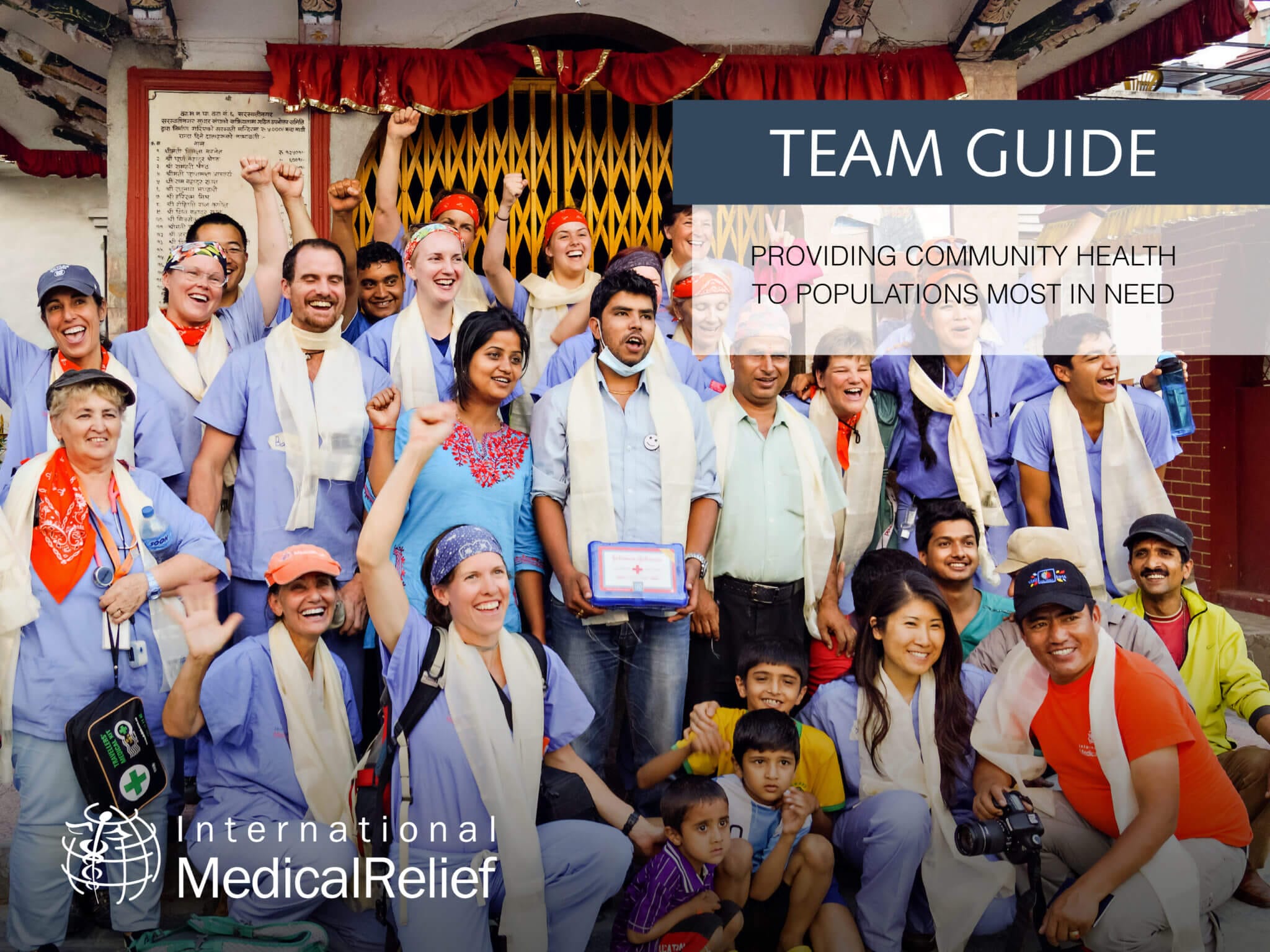
Download the Team Guide